The Food Tech Acceleration Trap
Why Technology Should Remove Work, Not Speed It Up
2/9/20262 min read

There is a question most operators never think to ask when a new piece of software lands on the floor: did this actually remove a step, or did it just make the same step digital?
It sounds rare.
It is not.
It is the central failure of technology adoption in hospitality - and it explains why venues that spend more on systems often feel more, not less, chaotic.
The industry has absorbed a belief so thoroughly it barely registers as a belief anymore: technology exists to make operations faster.
Vendors sell speed. Operators buy speed.
It sounds good, in an industry struggling for margin and staff.
But what arrives is usually something else entirely - a digital replica of an analogue process, with a login screen bolted to the front.
The Confusion Between Digitisation and Automation
The distinction matters more than most operators realise. Digitisation takes an existing process and makes it electronic.
A paper roster becomes a spreadsheet.
A handwritten order becomes a POS entry.
A phone call to a supplier becomes an email.
The steps remain. The sequence remains. The human decisions remain. The only thing that changes is the medium.
Automation is different. It removes the step entirely.
A system that watches stock levels and triggers a purchase order when a threshold is crossed -that is automation. A system that requires a manager to check stock, enter the data, generate the order, and send it manually - that is digitisation with extra clicks.
Most of what hospitality calls "technology" is digitisation. The process has not been redesigned. It has been relocated - from paper to screen, from voice to text, from one person's memory to a shared dashboard.
And that relocation carries its own cost. Step-Change Drag
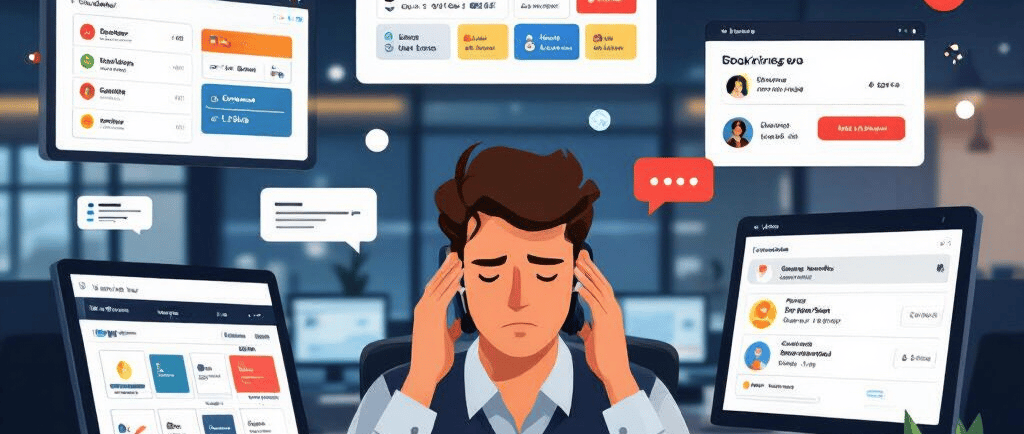
When a venue adopts a new system, the expectation is that things get easier. In many cases, the opposite happens - at least initially - and that initial drag often becomes permanent.
With AI promising to change the way we work, and a new, exciting tool promising even more released daily, it’s all but irresistible.
But change is never easy, and moments into an onboard, with limited support and often poor documentation, and as the marketing shine dissolves to reveal a deeply complex system that doesn’t quite fit what you need, something is revealed.
That technology has not removed work. It has redistributed it - often upward, onto the people whose time is most expensive.
This is step-change drag: the accumulation of small, invisible frictions that emerge when systems are layered on top of unchanged processes.
It rarely appears on any report. It shows up as a feeling - the sense that managers are busier than ever but less certain about what the numbers actually mean.