
Your blog post
Blog post description.
4/8/20263 min read
Introduction: The Importance of Multimedia in Hospitality and Restaurant Services in 2026
The hospitality industry has always thrived on providing exceptional guest experiences. However, in 2026, the advent of advanced multimedia technologies has revolutionized how businesses communicate, entertain, and personalize services for customers. Integrating multimedia into operations not only enhances guest satisfaction but also drives loyalty and repeat visits. As consumers increasingly expect immersive and interactive experiences, hospitality providers who leverage multimedia effectively can differentiate themselves and gain a significant competitive edge.
Understanding the Role of Multimedia in Modern Hospitality
What is Multimedia in Hospitality?
Multimedia in hospitality refers to the integration of various digital content forms - such as visuals, audio, video, animations, and interactive elements - into daily operations and guest interactions. These technologies are utilized in diverse ways, from digital signage and virtual tours to augmented reality (AR) and personalized multimedia content. The goal is to create engaging, innovative, and seamless experiences for guests, both online and onsite.
The Impact of Multimedia on Customer Engagement
Effective use of multimedia enhances customer engagement by making interactions more dynamic and personalized. For instance, virtual tours and 3D restaurant layouts help potential guests visualize their experience beforehand. During their visit, multimedia displays can provide real-time information, entertainment, and personalized recommendations. This depth of interaction increases satisfaction, encourages social sharing, and builds brand loyalty. In 2026, data shows that over 70% of hospitality businesses incorporate some form of multimedia to connect with guests on a deeper level.
Types of Multimedia Technologies Used in Hospitality and Restaurants
Digital Signage and Interactive Displays
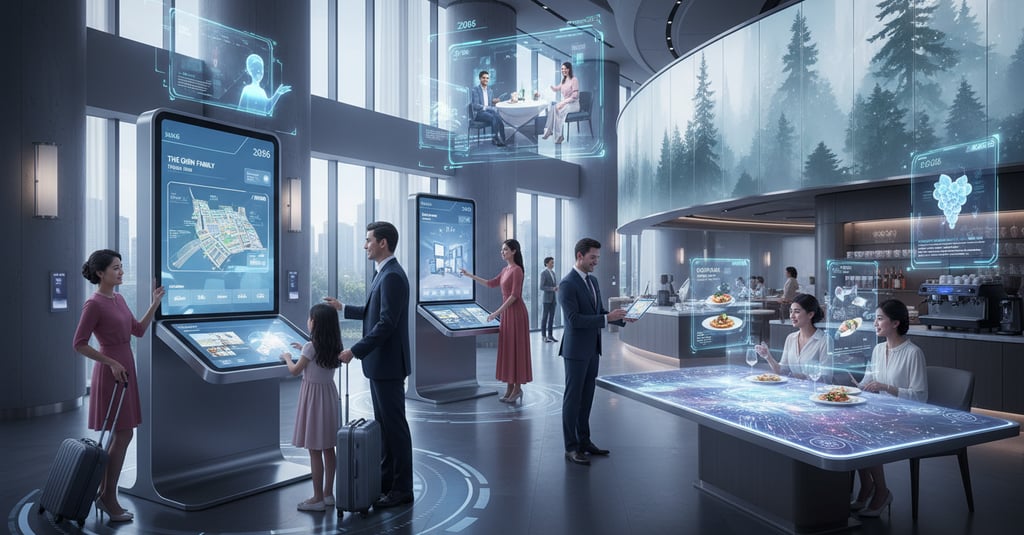
Digital signage in hotel lobbies, restaurants, and bars is a staple in 2026. These can be interactive touchscreens displaying menus, local attractions, or personalized offers. For example, an upscale restaurant might feature a digital wine wall, allowing guests to explore different wines through interactive screens.
Virtual Tours and 3D Visualization
Many hotels and restaurants offer 3D virtual tours on their websites, enabling guests to explore spaces before booking. Such technologies assist in decision-making and increase booking confidence. A luxury resort might include a virtual walkthrough of its spa facilities, beaches, and suites, creating an immersive preview for potential visitors.
Personalized Multimedia Content and AI Integration
Artificial intelligence allows businesses to deliver tailored multimedia content based on guest preferences and behaviors. Personalized video greetings, customized room ambiance settings, or tailored digital recommendations are common in 2026. AI-driven systems analyze data to enhance how multimedia enhances individual guest journeys.
Enhancing Customer Experience Through Multimedia Applications
Creating Memorable Dining Experiences
Multimedia transforms dining into an interactive journey. For example, some restaurants utilize projection mapping to animate table surfaces or walls with dynamic visuals synchronized to music and themes. AR menus that allow customers to see 3D images of dishes before ordering improve decision-making and satisfaction.
Streamlining Service and Communication
Multimedia solutions such as mobile apps, digital check-ins, and in-room tablets facilitate seamless communication. Guests can order room service, request amenities, or get local recommendations via interactive screens, reducing wait times and improving convenience.
Personalization and Customer Loyalty
Utilizing guest data, businesses personalize multimedia content—offering tailored promotions or recognizing special occasions like birthdays with customized visual messages. Such personal touches foster loyalty and encourage repeat visits.
Case Studies: Successful Multimedia Implementations in 2026
Luxury Hotel Chain Implements Augmented Reality for Guest Engagement
In 2026, a prominent luxury hotel chain introduced AR-based virtual concierge services. Guests use AR-enabled smartphones or glasses to access interactive hotel guides, explore local attractions virtually, and receive real-time information about hotel amenities. This initiative increased guest satisfaction scores by 15% and led to higher positive reviews.
Restaurant Uses Projection Mapping to Enhance Dining Atmosphere
A renowned fine-dining restaurant applied projection mapping on tables, displaying artistic visuals synchronized with music and cuisine themes. This immersive dining environment earned widespread media attention, increased social media sharing, and boosted reservations by 20%.
Digital Signage and AI-Driven Personalization in Boutique Hotels
A boutique hotel group integrated AI-powered digital signage that adapts content based on guest preferences—providing personalized welcome messages, tailored activity suggestions, and dynamic room settings. The result was a 12% increase in guest retention and enhanced overall reviews.
Future Trends of Multimedia in Hospitality and Restaurant Services
Integration of 5G Technology
With the rollout of 5G across 2026, multimedia content will become even more seamless and high-quality. Expect ultra-fast streaming and predictive AI features that respond instantly to guest needs - further elevating personalized services.
AI-Driven Content Creation
Future multimedia solutions will heavily rely on AI to generate dynamic content, like customized virtual backgrounds, real-time translating menus, or personalized video greetings—making interactions more engaging and tailored.
Conclusion: Embracing Multimedia for Competitive Advantage in 2026
As the hospitality and restaurant industries evolve in 2026, the effective application of multimedia is no longer an option but a necessity for those aiming to stand out. From immersive virtual tours and AR-enhanced dining to AI-powered personalized content, multimedia technologies are enabling businesses to deliver unforgettable experiences that boost customer engagement, loyalty, and revenue. Forward-thinking hospitality providers who harness these tools will not only meet but exceed guest expectations - ensuring long-term success and a stronger competitive position in this dynamic landscape. Embrace multimedia today, and shape the future of hospitality in 2026 and beyond.